Source 3d light bump and go car for Kids Play, Outdoor Exercise, and Gift Giving
Compare 30 listings for the 3d light bump and go car, featuring mechanics-driven models with flashing lights and sound effects. Buyers can review specifications like PP plastic construction, age suitability from 2 to 13 years, and packing details from Hebei and Guangdong suppliers.
Key considerations
Products List


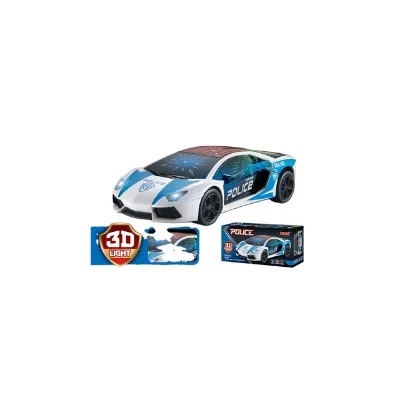


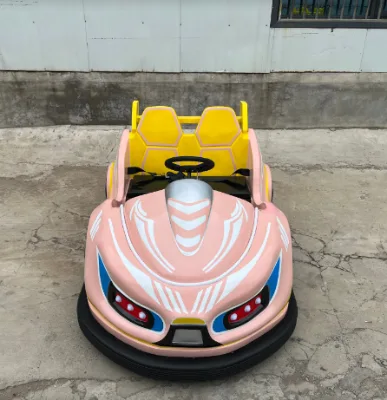
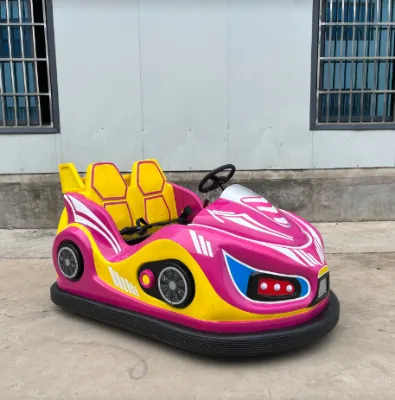

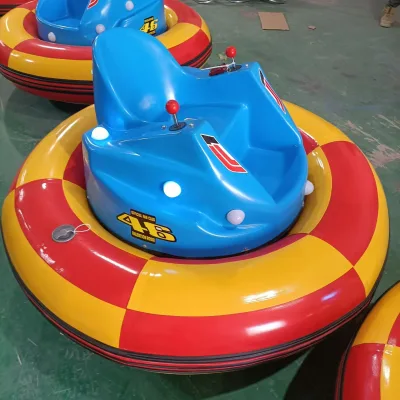
Comprehensive Sourcing Guide
Strategic Sourcing Guide for 3D Light Bump and Go Cars
Understanding Product Architecture and Core Specifications
The "3D light bump and go car" represents a specific niche within the ride-on toy category, characterized by mechanical propulsion rather than electric motors. Buyers must first distinguish this product from battery-operated ride-ons, as the operational mechanics differ fundamentally. Based on observed market data, these vehicles are typically constructed from high-density Polypropylene (PP) plastic, a material selected for its durability and impact resistance suitable for active play. The core mechanism relies on "driving mechanical energy," where the child's input—usually pushing, pulling, or twisting the body—generates the motion. This eliminates the need for batteries, addressing both safety concerns regarding electrical components and logistical costs associated with power sources.
The visual and auditory experience is a primary driver for this product category. The "3D light" feature often refers to flashing lights integrated into the chassis, which activate in response to movement or impact. This is frequently paired with a "mute wheel" or "universal wheel" system designed to reduce friction and noise, ensuring the vehicle glides smoothly while the "music" function provides auditory feedback. It is critical to note that while many listings mention "Have Music" or "Sound," specific technical constraints often indicate that these units do not support external MP3 inputs or require battery replacements for the sound module, relying instead on internal mechanical triggers or pre-recorded sound chips. The shape of these vehicles varies, with common configurations including "Twist Car," "Car/Truck," and "B/O bump and go" designs. The age range for these products is broad, typically spanning from 2 to 13 years, though specific models may target narrower demographics such as 3-8 years or 5-7 years.
Technical Variations and Model Differentiation
When sourcing these items, buyers will encounter significant variation in model numbers and physical dimensions, which directly impacts shipping efficiency and storage requirements. The market data reveals distinct model identifiers such as F135, B059, and DK00205563, each associated with unique packaging standards and dimensions. For instance, one observed standard dimension is 754532cm, while another is 531939cm. These discrepancies highlight the importance of verifying the "prod_standard" for every specific SKU before placing an order, as a single carton may contain different quantities of units depending on the model's footprint.
The packaging configuration is another critical technical variable. Some models are packed individually in color boxes, while others are shipped in master cartons with specific quantities, such as 8 pieces per carton or 144 pieces per carton. The "CUFT/Ctn" (cubic feet per carton) and "CBM/Ctn" (cubic meters per carton) figures are essential for calculating freight costs. For example, a carton size of 654081cm suggests a specific volumetric weight that must be accounted for in logistics planning. Furthermore, the "Packing Quantity" and "G.W/N.W" (Gross Weight/Net Weight) ratios vary significantly between suppliers, influencing the total landed cost. Buyers must also verify if the product supports customization; while some listings indicate "Customization: Available," others specify "Non-Customized," which limits the ability to tailor branding or color schemes to specific market demands.
Compliance, Safety Standards, and Certification Verification
Safety compliance is the most critical factor when importing toys intended for children. While the provided data lists "prod_standard" as dimensions rather than safety certifications, buyers must independently verify that products meet the regulatory requirements of their target market. In the United States, this typically involves compliance with ASTM F963 and CPSIA regulations, while the European Union requires adherence to EN71 standards and the CE mark. The "Hebei, China" and "Guangdong, China" origins indicate major manufacturing hubs, but the specific factory's certification status is not guaranteed by the location alone.
Buyers should explicitly request test reports from suppliers to confirm that the PP plastic used is non-toxic and that the flashing lights and sound mechanisms do not pose electrical hazards, even in mechanically driven units. The "Age Range" listed on product pages, such as "2 to 4 Years" or "14 Years & up," must align with the actual safety testing performed. A product marketed for "Kids Twist Car" usage must be rigorously tested for stability to prevent tipping, especially given the "Bump and Go" nature of the design which involves dynamic movement. Additionally, the "Pushhanle: Can Not Add" attribute suggests a design limitation that must be clearly communicated to end-users to ensure safe usage, particularly for younger children who might rely on handles for balance.
Cost Drivers and Pricing Structure Analysis
The pricing for 3D light bump and go cars is influenced by several variables, with the observed range in the market spanning from $1.60 to $1,850. This wide disparity suggests that the lower end of the spectrum likely represents bulk, unbranded, or simplified mechanical models, while the higher end may include premium packaging, complex lighting systems, or specialized branding. The "Selling Units" being listed as "Single item" in some contexts can be misleading; in B2B procurement, the actual unit cost is almost always tied to the Minimum Order Quantity (MOQ).
The MOQ range observed is between 1 and 400 units, with some suppliers requiring a minimum of 5 cartons. This variation allows for flexibility but requires careful financial modeling. Buyers must calculate the cost per unit based on the "Packing Quantity" per carton. For example, if a carton contains 144 units, the MOQ of 5 cartons equates to 720 units, significantly impacting the total capital outlay. The "Supply Ability" of 50,000 pieces per week indicates that suppliers have the capacity to handle large orders, but lead times must be confirmed separately. Shipping costs are a major component of the final price, especially given the volumetric nature of the "Carton size" and "CBM/Ctn" figures. Buyers should compare the cost of shipping a 20GP container (133 cartons) versus a 40HQ container (322 cartons) to optimize the freight-to-product ratio.
Supplier Evaluation and Operational Due Diligence
Evaluating suppliers for this product category requires a focus on their manufacturing capabilities and logistical reliability. The "Place of Origin" data points to Hebei and Guangdong provinces, which are established toy manufacturing regions. However, the presence of a brand name like "Denko Toys" in some listings suggests that some suppliers operate as both manufacturers and brands, while others may be trading companies. Buyers should verify the "Brand Name" and "Description" to ensure they are dealing with the actual manufacturer if they require direct quality control.
The "Port of dispatch" is listed as Shantou, a major port for toy exports, which simplifies logistics for many buyers. However, the "Packing Details" regarding container loading (e.g., 20GP: 133 Cartons) must be cross-referenced with the supplier's actual loading capabilities. A supplier claiming a high "Supply Ability" must demonstrate consistent quality control to maintain that volume. Buyers should request samples to verify the "Function: Driving Mechanical Energy" and the reliability of the "3D light" and "Music" features. It is also essential to confirm the "Customization" status; if a buyer requires a specific color or logo, they must ensure the supplier can accommodate "Customization: Available" requests without compromising the structural integrity of the PP plastic.
Quality Control Protocols and Long-Term Procurement Strategy
Implementing a robust quality control (QC) protocol is essential for mitigating risks associated with mechanical toys. The QC process should begin with a pre-production sample approval, focusing on the "Shape: Twist Car" or "Car/Truck" geometry to ensure it matches the approved mold. During production, random inspections should verify the "Mute Wheel" functionality and the durability of the "Universal Wheel" system. The "Flash of Light" feature must be tested for consistency and brightness, ensuring it does not flicker or fail prematurely.
For long-term procurement, buyers should consider the "Usage: Exercise Kids Balance Concept" aspect of the product. This implies that the toy is not just for entertainment but also for physical development, necessitating high standards for stability and safety. Establishing a relationship with a supplier who offers "Customization" can provide a competitive advantage, allowing for private labeling or unique design modifications. However, buyers must remain cautious of "Non-Customized" suppliers if they plan to differentiate their product line. Finally, maintaining a buffer stock is advisable given the potential for seasonal demand spikes, especially as the "Age Range" covers a broad spectrum of children's developmental stages. By adhering to these strategic guidelines, buyers can effectively source high-quality 3D light bump and go cars that meet both safety standards and market expectations.
Comparative Analysis of Key Product Attributes
To facilitate clearer decision-making, the following table summarizes the key variations observed in the market data for 3D light bump and go cars. This comparison highlights the differences in dimensions, packaging, and functional attributes that buyers must evaluate.
| Attribute Category | Observation A (Model F135) | Observation B (Model B059) | Observation C (Model DK00205563) |
|---|---|---|---|
| Product Type | Kids Twist Car | Ride on Car | B/O bump and go car |
| Dimensions (LWH) | 754532cm | 531939cm | 654081cm (Carton) |
| Material | PP Plastic | Plastic | Plastic (PP implied) |
| Power Source | Mechanics-driven | Mechanics-driven | Mechanics-driven |
| Lighting | Have Flashing Light | Not specified | 3D Light |
| Audio | Have Music | Sound | Not specified |
| Battery Requirement | No | No | No |
| Packing Quantity | 8PCS/CTN | Not specified | 144PCS/CTN |
| Origin | Hebei, China | Hebei Province, China | Guangdong, China |
| Customization | Available | Not specified | Non-Customized |
| Target Age | 3-8 years | Not specified | 2 to 14+ Years |
This table underscores the necessity of verifying specific model details before procurement. The variation in packing quantities (8 vs. 144 units per carton) drastically affects the logistics strategy and cost per unit. Similarly, the difference in dimensions impacts the number of units that can be loaded into a shipping container, directly influencing the overall profitability of the import. Buyers must treat these attributes as specific observations rather than universal standards, ensuring that their procurement strategy aligns with the exact specifications of the chosen supplier and model.
FAQs
What power source does the 3d light bump and go car use?
The car uses mechanics-driven power without batteries. It relies on the child's physical movement to generate motion and activate the flashing lights and sound features.
Which age groups are suitable for this kids twist car?
The product is suitable for children aged 2 to 14 years and up. Specific models target narrower ranges like 3 to 8 years or 5 to 7 years depending on the design.
Can buyers customize the color or branding of the car?
Customization is available for some models but not all. Buyers must verify the specific listing, as some items are marked as non-customized with fixed color schemes.
How are the cars packed for shipping in bulk orders?
Packing varies by model, with options like 8 pieces per carton or 144 pieces per carton. Some units come in color boxes while others are shipped in master cartons.
What material is used to construct the 3d light bump and go car?
The vehicle is constructed from high-density PP plastic. This material is selected for its durability and impact resistance to withstand active play by children.
Do these cars require external MP3 players for music?
No, the cars do not support external MP3 inputs. They feature built-in sound modules that activate mechanically or via internal triggers without needing battery replacements for the sound chip.
Which locations are the primary origins for these toys?
The primary origins are Hebei Province and Guangdong Province in China. These regions are established manufacturing hubs for plastic ride-on toys and mechanical vehicles.